Tuesday, September 21, 2010

Go!!


Well, things are on their way. The rest of the cultivars has gone into bud burst. Shoot growth will rapidly increase in the next three weeks. Pre-suckering has been done on almost all the blocks already. Now we wait for proper shoot length to start suckering. We had 7mm of rain since yesterday. Nothing to stress about but it is definitely a warning of things to come.

Last year was a difficult year with regards to fungus in the vineyard. With loads of summer rains conditions were perfect for Downy Mildew. Spraying early this year is essential.

Here are a few shots of how things are looking now


Friday, September 17, 2010

Get set

Its been a rather quiet week. We started suckering some blocks, but not a lot. Spraying started early this year to avoid the disastrous downy mildew episode we had last year. The Chenin blancs, Chardonnay and Pinotages are fully budded. Waiting for the Sauvignon blanc, Shiraz, Cabernet Sauvignon, Cinsaut, Merlot and the rest to wake up fully. I don't have much to write about this week, so I'll just post some pics of the sleepy guys. This weeks pictures have been taken with a LG QC900 cellphone - Not as good as the Panasonic Lumix FZ50 and Canon Powershot D10 that I normally use, but its ok.

Cabernet Sauvignon - Waking up


Pinotage


Cinsaut


Tuesday, September 7, 2010

On your marks...

Budding has started early this year due to the abnormal hot winter we had. Pinotage, Chenin blanc and the young vines are starting to awake after their winter slumber. Cabernet and the rest of the guys are still sleeping, at least for another week or two. Just a few pics of some of the early birds. This one is Chenin blanc


Thursday, September 2, 2010

Noble

I went to see how things are going in the block Chenin blanc where we get some of our noble grapes from. It is situated 8km from the South Atlantic Ocean. Looking at the vines you can see that they are subjected to moist conditions quite a lot, which is ideal for getting Botrytis rot. The pruning went very well and the general condition of the block is very good.

I'm also adding two photos I took last year in July of a stunning sunrise. This week was raining and the weather was poor, so I didn't get to the vineyards enough to have something interesting for this week, although I find noble grapes very interesting. Next year when we harvest the noble I will write a detailed piece about Botrytis cinerea.


Monday, August 30, 2010

Nothing in particular

I wasn't at the office last week, so I don't have anything interesting or something particular for last week. I will try to do some more writing by the end of this week. Pruning is basically coming to an end now. Here and there we still have some blocks to complete, but nothing big. Budding is picking up speed now. I see in the weather forecast that the next 15 days will also be moderately hot, so budding may even pick up more speed. A bit early though, but I read this morning that the whole world had the hottest July on record. No wonder the vineyards started budding so early!

Here are some random pics:

Coccinellidae (Lady Bird) mating. These guys play an integral role in the fight against the Mealy Bug.


Pruned vineyards (Still sleeping nicely)


And the Skurwe Jantjie again at his post


Monday, August 23, 2010

Part of History

Last Thursday our Cellar master and I went to see some really old vines (in South African terms) at the West Coast. We are looking to help these vineyards produce at the top of their ability once more, and help preserve this wonderful vineyards. The cultivars are Palomino (55+ years old), Barbarossa (80 years old) and some Muscat d'Alexandrie (90 years and 40 years old).

I would just like to post a few photos of these. I think having these old vines are amazing. You don't see vines of this age every day. The oldest vines we currently have is Chenin blanc (42 years), Cincaut (56 years), Pinotage (36 years) and Grenache noir (35 years).

Barbarossa


Muscat d'Alexandrie


Palomino


Thursday, August 12, 2010

The Last Straw!

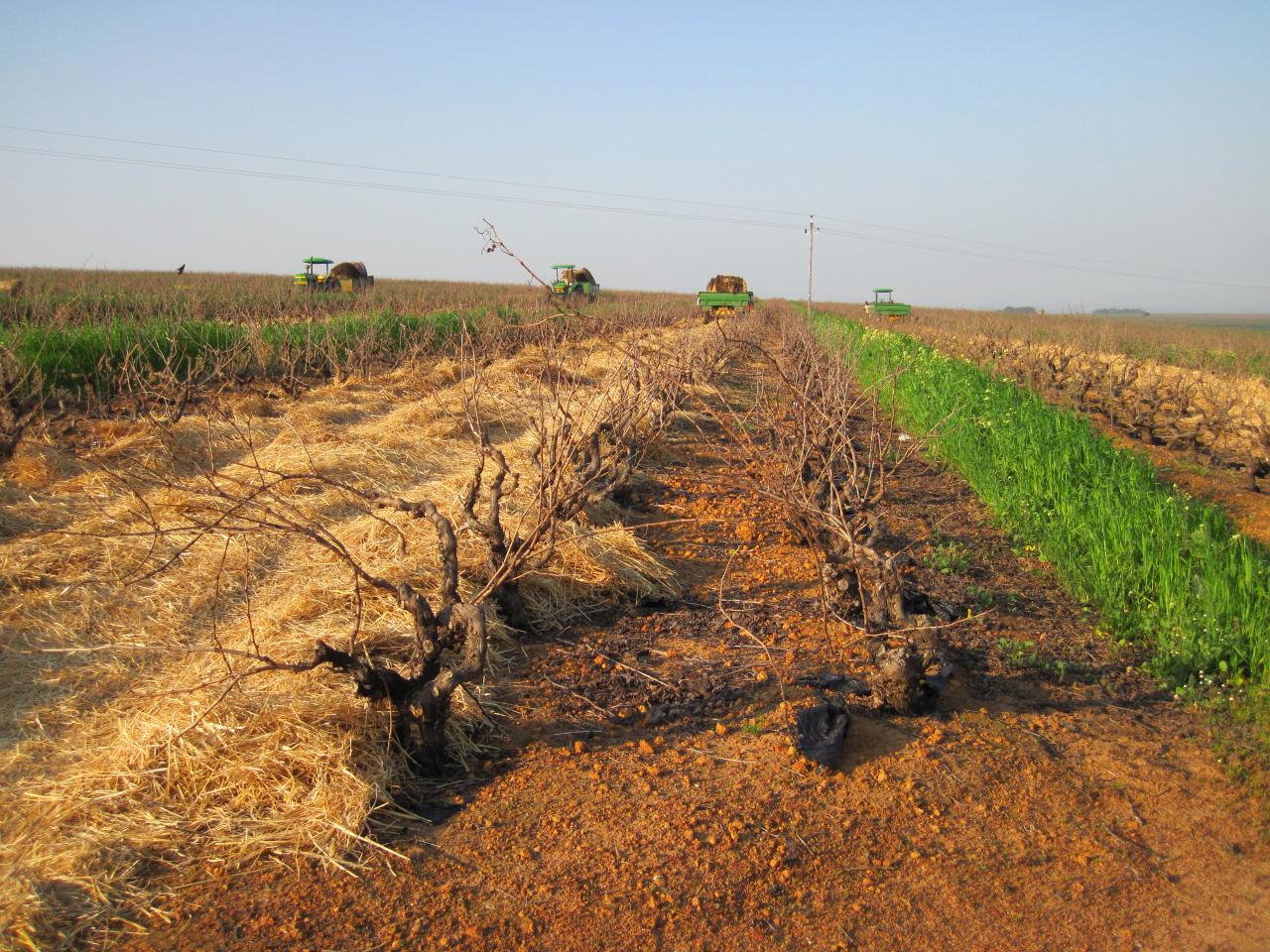
Using straw (Hay) as an alternative ground cover is catching on in the Darling area. The producers have seen the significant effect on soil temperature, soil health and soil moisture retention.

In the beginning of this year, a camera crew from Denmark was filming a short piece in one of our vineyards that had Hay as a ground cover. This particular day was extremely hot. One of the guys had a laser thermometer. He pointed it on top of the Hay - 45 degrees Celsius. We lifted the 15cm thick cover and pointed it directly on the soil surface - 33 degrees Celsius. Massive difference and the soil felt cool and still had some moisture in.

Another interesting thing about using Hay as a ground cover, is the fact that Hay has a fairly large population of Protozoa in it. Earthworms also feed on these micro creatures, thus creating a even better environment for these guys.

The organic matter in the soil increased dramatically over two years. A hard, dry compact soil was transformed into a cool, moist soil with an ideal granular structure. The water holding capacity of the soil is also increased, which is crucial in a dry land area like ours.

There are many more pro's to using Hay, and it by far outweighs the con's, which is fire hazard. But, managed properly, this can be avoided or controlled.