Monday, August 30, 2010

Nothing in particular

I wasn't at the office last week, so I don't have anything interesting or something particular for last week. I will try to do some more writing by the end of this week. Pruning is basically coming to an end now. Here and there we still have some blocks to complete, but nothing big. Budding is picking up speed now. I see in the weather forecast that the next 15 days will also be moderately hot, so budding may even pick up more speed. A bit early though, but I read this morning that the whole world had the hottest July on record. No wonder the vineyards started budding so early!

Here are some random pics:

Coccinellidae (Lady Bird) mating. These guys play an integral role in the fight against the Mealy Bug.


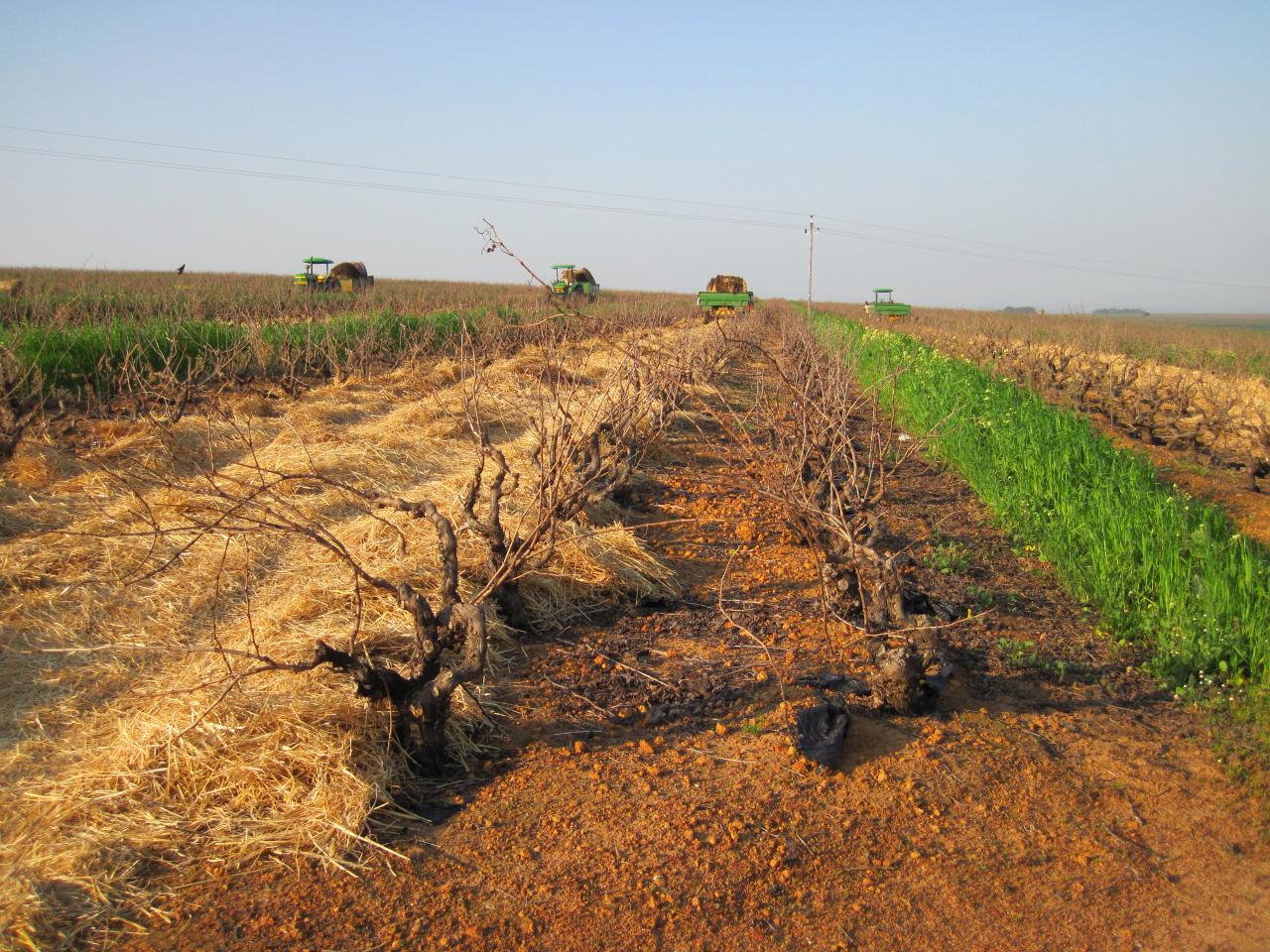
Pruned vineyards (Still sleeping nicely)


And the Skurwe Jantjie again at his post


Monday, August 23, 2010

Part of History

Last Thursday our Cellar master and I went to see some really old vines (in South African terms) at the West Coast. We are looking to help these vineyards produce at the top of their ability once more, and help preserve this wonderful vineyards. The cultivars are Palomino (55+ years old), Barbarossa (80 years old) and some Muscat d'Alexandrie (90 years and 40 years old).

I would just like to post a few photos of these. I think having these old vines are amazing. You don't see vines of this age every day. The oldest vines we currently have is Chenin blanc (42 years), Cincaut (56 years), Pinotage (36 years) and Grenache noir (35 years).

Barbarossa


Muscat d'Alexandrie


Palomino


Thursday, August 12, 2010

The Last Straw!

Using straw (Hay) as an alternative ground cover is catching on in the Darling area. The producers have seen the significant effect on soil temperature, soil health and soil moisture retention.

In the beginning of this year, a camera crew from Denmark was filming a short piece in one of our vineyards that had Hay as a ground cover. This particular day was extremely hot. One of the guys had a laser thermometer. He pointed it on top of the Hay - 45 degrees Celsius. We lifted the 15cm thick cover and pointed it directly on the soil surface - 33 degrees Celsius. Massive difference and the soil felt cool and still had some moisture in.

Another interesting thing about using Hay as a ground cover, is the fact that Hay has a fairly large population of Protozoa in it. Earthworms also feed on these micro creatures, thus creating a even better environment for these guys.

The organic matter in the soil increased dramatically over two years. A hard, dry compact soil was transformed into a cool, moist soil with an ideal granular structure. The water holding capacity of the soil is also increased, which is crucial in a dry land area like ours.

There are many more pro's to using Hay, and it by far outweighs the con's, which is fire hazard. But, managed properly, this can be avoided or controlled.


Tuesday, August 10, 2010

Final Pruning

We started with the final stage of pruning last week, called "Stompsnoei" in Afrikaans. The initial pruning phase is called "Skoonsnoei", and involves cutting away all unwanted shoots. Only the bearer shoots are then left.

Then, as close to budding as possible, the remaining shoots are pruned to their desired length. We aim for two eyes per shoot. This is the crucial pruning phase, as this determine the yield. We aim for 6 to 8 tonnes per hectare, so having more budding eyes puts this in jeopardy and just makes suckering harder.

I'm just a little worried about the weather. We are having unusually long spells of temperatures in the mid twenties and this could result in a early budding season. Not preferable seeing that we expect some rains to come late in the season again. We prune our vines back to two eyes. This is how things looks now


Thursday, July 29, 2010

Lone Ranger

What I enjoy about Darling is the fact that it is still so close to nature. I mean yes, obviously I work outside in the field and vineyards, but I doubt there are a lot of vineyards where there are so much bucks, birds, mammals and reptiles. Here are just a few. Saw this guy last week. He is the "Lone Ranger". The only wild Springbok (Antidorcas marsupialis) I've seen around. He is a little camera shy though.


The next model is what we call in Afrikaans a "Skurwejantjie". As far as I know he is called the "Cape girdled lizard" in English. But anyway, it is of the genus Cordylus. Brilliant little fellow. When you approach him he hardly blinks. My camera lens almost touches him when I photograph him.


Next we have the Secratarybird (Sagittarius serpentarius). I only see them in winter. They are always in a pair. Very secretive birds and very alert. Well, wouldn't expect anything else from a bird of prey. They are very difficult to photograph, unless you have a massive zoom lens.


And finally, the Blue Crane (Anthropoides paradisia), South Africa's national bird. Also usually found in pairs, but I have photographed them in flocks of more than fifty. I might do a post about them someday.


And to end this post just a nice picture I took last year.

Thursday, July 22, 2010

Nitrogen-fixing bacteria


Lupines are sometimes sown in the working rows of vineyards as `n cover crop. Now, besides the obvious benefits of erosion control, soil temperature regulation, soil moisture control and weed suppression, these legumes have something very special about them.

On the roots of these Lupines, nitrogen-fixing bacteria are "binded" to the roots. They work in symbiosis with the plant. This bacterium is called Bradyrhizobium japonicum. It is a nodulating, microsymbiotic nitrogen-fixing bacterium species.

Approximately 80 percent of the atmosphere is nitrogen gas (N2).Plants cannot use nitrogen in this form. They use NH3 (ammonia) to manufacture amino acids, proteins, nucleic acids and other nitrogen-containing components.

Legumes nitrogen-fixation starts with the forming of a nodule on the root.


The plant supplies all nutrients and water for the bacteria to grow, and the nodule multiplies very fast from here on. Young nodules are usually grey to white on the inside. This is due to the fact that they are not fixating nitrogen yet. As they get older, the inside turn pinkish-red. This indicates that they are fixating nitrogen. The pink or red color is caused by Leghemoglobin (similar to hemoglobin in blood) that controls oxygen flow to the bacteria.

The nitrogen fixing doesn't come free. The plant still needs to donate a substantial amount of energy and nutrition towards the bacteria to help it with the fixation process. If the plant is stressed (due to too cold weather, drought or nutrient deficiency), nitrogen fixation will will be stalled or progress at a slow pace.

The nitrogen doesn't "leak" into the soil so that other plants can use it. When the legume dies and decomposes, it releases the nitrogen into the soil in a usable form, so that other plants (grapevines in this case) can use it.


Tuesday, July 20, 2010

Introduction


Welcome to Darling Vines. This blog was created by the viticulturist of Darling Cellars, South Africa, Jaco Engelbrecht. It is intended to be a weekly blog, so I will try to update it every Friday. I don’t plan on writing a lot, its more of a photo blog.

Just a few things before I start with the actual first post.


In 1948, Mamre Weg Cooperative Cellar was established. 1996 heralded a new era for the region of Darling with the establishment of the private cellar: Darling Cellars. With the unique terroir and recent demarcation of the Darling district, the focus has been on wines which are region and varietal true. About 23 shareholders produce grapes from a total of ±1300ha, averaging 6 tons/ha.

The cool and temperate West Coast climate lends itself to a variety of different micro- and mesoclimates which, along with the different soil types, lead to unique grapes which we guide into even more unique wines. Having 90% of all vineyards dry land and roughly the same percentage bush vine (i.e. not trellised), this is as close to what nature intended for grapes to be as one can get. This all culminates into wines which are true to the terroir from which they come and are true to the identity which we have crafted over time for our wines.

(Adjusted from the Darling Cellars website: www.darlingcellars.co.za)

That’s all for the intro, more on soil, weather and things in the vineyards at a later time.